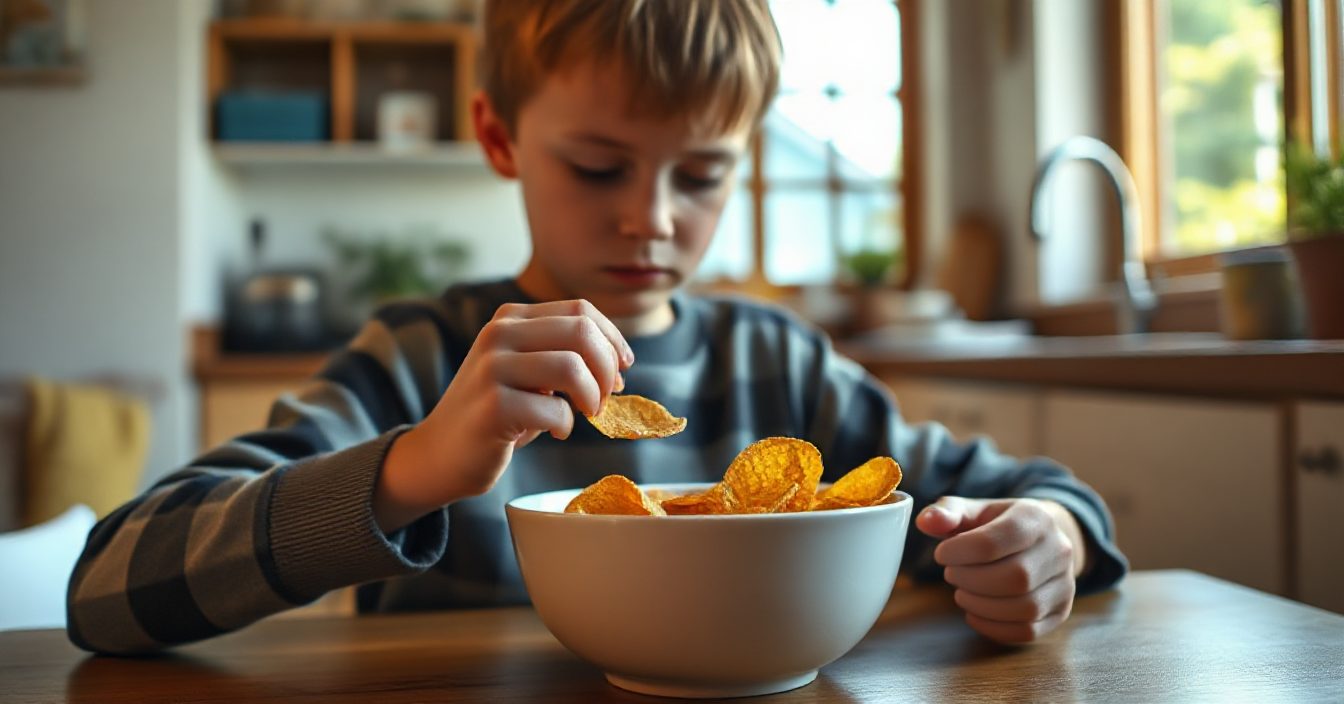
Do you wonder if the snacks on the kitchen counter are dimming your child’s smile? Are you looking for a clear answer that won’t add more worry? The answer may be simpler than you think, but it does need a little digging.
I’m a researcher and a parent of a neurodivergent daughter. When I brought our log to her psychologist, she asked, “What did your daughter say?” I had to admit I was not tracking that. That moment reminded me how easy it is to overlook the everyday details that shape a child’s well-being.
The question at hand is whether ultra-processed foods (UPF) affect the happiness and quality of life of children with ADHD. Below are practical ways to explore this in your own home.
Know the evidence
- Read the study. A 2026 cross-sectional study of 128 Saudi children with ADHD found that UPF made up nearly half of daily calories, yet there was no significant link between UPF intake and health-related quality of life scores (Alwaili et al., 2026). Keep the paper handy so you can refer back to the methods section when questions arise. Seeing the exact numbers helps you gauge how the findings might relate to your child’s diet.
- Watch for nuance. The same research showed overall quality-of-life scores were lower than healthy norms, but this drop was unrelated to how much processed food the children ate. It suggests other factors—like sleep, medication, or stress—play larger roles. Remember that a single study rarely tells the whole story.
- Ask your doctor. Because diet interacts with medication, sleep, and behavior, it’s worth discussing any major dietary changes with your child’s healthcare provider. Your doctor can help you prioritize tweaks that are safe and evidence-based. A brief conversation can also uncover hidden sensitivities you might not have considered.
Understanding the research gives you a solid foundation, but the real test happens in the kitchen and at the dinner table.
Observe your child’s day-to-day
- Track mood after meals. Use a simple log—note the food, the time, and your child’s mood or energy level 30–60 minutes later. Write down any irritability, hyperactivity, or calm moments you notice. Over a week, patterns often emerge more clearly than broad statistics, and you can share the chart with your clinician.
- Notice energy swings. Ultra-processed foods are high in refined carbs and additives, which can cause quick spikes and drops in blood sugar. A sudden crash may look like a symptom flare, especially if it follows a sugary snack. If you see this repeatedly, try swapping that snack for a protein-rich alternative and watch the difference.
- Listen for feedback. Ask your child directly, “Did you enjoy that snack?” or “Did it make you feel weird?” Their own observations are valuable data and empower them to take part in the process. When they feel heard, they’re more likely to cooperate with any changes you suggest.
These observation steps turn vague concerns into concrete information you can act on.
Create balanced routines
- Offer whole-food alternatives. Swap a sugary cereal for oatmeal topped with fresh fruit, or replace a packaged snack with sliced apple and nut butter. The change is simple, affordable, and often more satisfying because it includes natural sweetness and texture. Children usually notice the difference in taste and energy level within a day.
- Plan regular meals. Consistent meal times help stabilize blood glucose, which can reduce irritability and improve focus for many children with ADHD. Aim for three balanced meals and two snacks spaced evenly throughout the day. When the schedule is predictable, your child knows what to expect and can settle more easily into routines.
- Include the child in prep. Letting your child help wash veggies or stir a smoothie gives them ownership and can turn a “healthy” task into a fun activity. Even a small role, like choosing a fruit, builds confidence and reinforces the habit of eating whole foods. The shared experience often leads to fewer complaints at the table.
Even though the Saudi study did not find a direct connection between ultra-processed food and quality of life, many parents report that small dietary tweaks improve mood, sleep, and behavior. The evidence suggests that while processed foods may not be the sole driver of happiness, they are a piece of the larger puzzle that includes sleep, medication, and emotional support.
Remember, you are the expert on your child’s daily life. Use the strategies above to gather your own data, talk with your healthcare team, and make adjustments that feel right for your family.
Have you tried any of these approaches, or discovered something else that helps your child feel happier? Share your experiences in the comments below.
Sources
- Alwaili LM et al. — "High Ultra-Processed Food Consumption but No Association with Quality of Life in Saudi Children and Adolescents with ADHD" (2026)
- ADDitude Magazine — "Do ADHD Meds Stunt Growth? A New Stimulant Study Says No" (2026)
- ADDitude Magazine — "New Research: Sex Differences Impact ADHD Symptoms, Treatment Efficacy" (2026)
- ADDitude Magazine — "All Brains Are Beautiful" (2026)