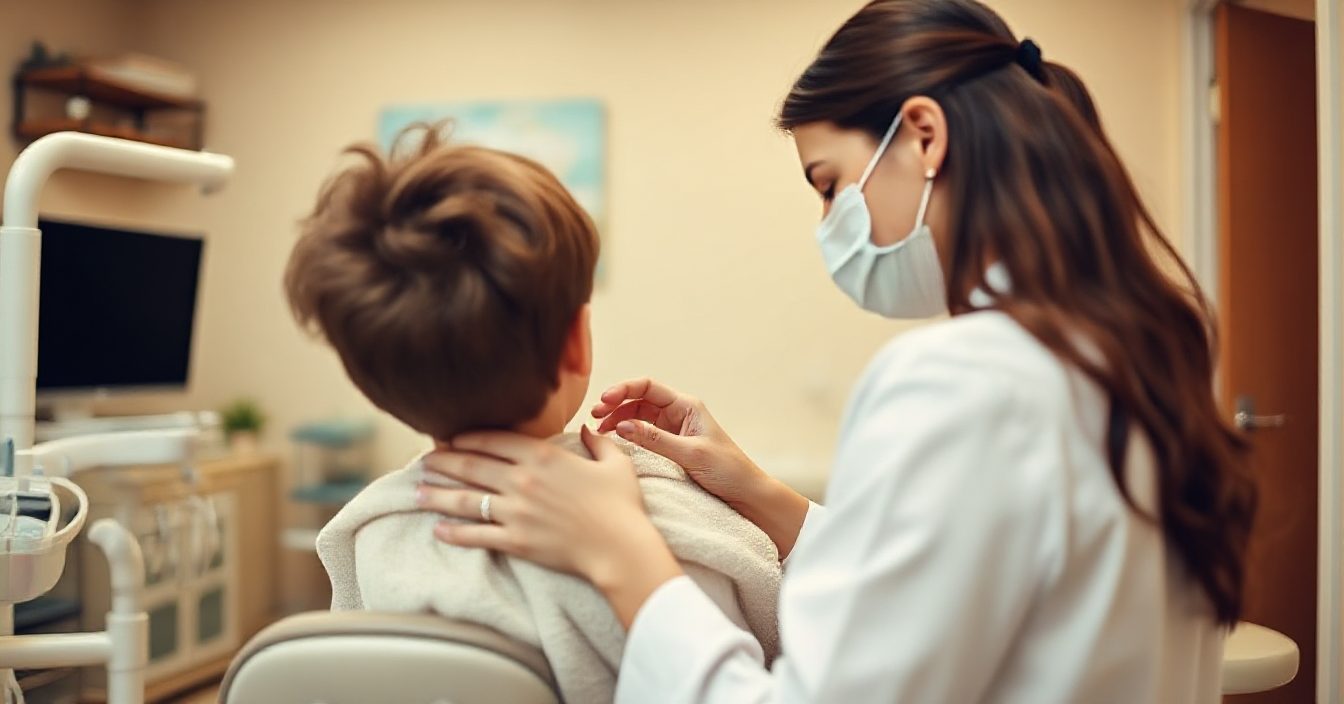
Do you worry a dental visit will overwhelm your child? Are you looking for a dentist who actually understands sensory needs? Finding one may be easier than you think.
She notices what everyone else misses: a bird on a branch, the feathers, the colors, the worm in its mouth. The same senses that catch all of that can make a bright room and a buzzing drill feel enormous. A dentist who gets that makes all the difference.
The good news is that researchers have been studying how to make dental care gentler for sensory-sensitive kids. A 2023 study by Stein Duker and colleagues gave 162 autistic children aged 6 to 12 two dental cleanings, one in a regular room and one in a sensory-adapted room. The children showed significantly lower physiological stress and less behavioral distress in the adapted environment. That tells me the room itself matters. So does the person in it.
Ask the right questions first
You learn a lot from one phone call. Here is where I start.
- Ask about sensory experience. Ask if the office has worked with sensory-sensitive children before, and what that looked like. The answer, and how comfortable they are answering, tells you a great deal.
- Ask what they can adjust. Can they dim the lights? Lower the noise? Offer a milder-tasting rinse? In a 2024 review by Prynda and colleagues, sensory-adapted environments were among the strategies that reduced anxiety in autistic children. An office that already does small adjustments is a good sign.
- Ask how you can help. Ask whether you can stay in the room, hold a hand, or bring a comfort object. If they welcome you in, they see you as part of the team.
Visit before any treatment
A short, no-treatment visit takes the mystery out of the place. Your child meets the room with nothing scary attached to it.
- Walk the space together. Sit in the waiting area. Peek at the chair. Notice the lights, the sounds, the smell of the materials. You will see quickly what might set your child off, and the staff get to practice welcoming you.
- Bring a comfort item. Ask if your child can hold a favorite toy, a weighted lap pad, or noise-cancelling headphones. A familiar object gives a sense of control when everything else is new. Most offices say yes when you explain why it helps.
- Try a short reset. Pause during the tour for a minute of slow breathing or a quiet moment. Watch what the staff do. If they wait patiently now, they will likely honor those pauses during a real appointment.
Make a simple sensory plan
Once you have found an office that listens, you can plan the visit together. A plan turns the unknown into something your child can picture.
- Make a picture roadmap. Lay out the steps with simple images, from sitting in the chair to the final rinse. Seeing the order ahead of time takes away the surprise. Predictable steps feel safer than a mystery.
- Request the adjustments that help. Ask for dimmer lights, a quieter tool, or a gentler-tasting rinse. In a 2022 study by Fallea and colleagues, 20% of autistic children were successfully treated in a regular room, while 68% were successfully treated in a sensory-adapted one. The setting shaped whether the visit worked.
- Plan a calm ending. Line up something your child loves for afterward, like a favorite book or quiet play. A good ending gives the whole visit a different shape in memory. Over time, the dentist stops being the hard part.
Trust what you see
You know your child better than any form does. If a dentist rushes, talks over you, or brushes off the sensory piece, that is information. Keep looking. The right office treats your child's sensitivity as something to work with, not around.
I am a parent reading the research, not a dentist. For any worry about anxiety or treatment, talk it through with your own dental and medical team. But you get to ask for a gentler room, and the studies are on your side when you do.
Have you found a dentist who understands your child's sensory world? Tell me in the comments what worked, and what you wish you had asked for sooner.
This article is for general information only. It is not medical advice and is not a substitute for care from your child's doctor or care team. I'm a parent, not a doctor.
Sources
- Stein Duker, Como, Jolette, Vigen, Gong, Williams (2023). Sensory Adaptations to Improve Physiological and Behavioral Distress During Dental Visits in Autistic Children: A Randomized Crossover Trial. JAMA Network Open. PMID 37266941
- Prynda, Pawlik, Niemczyk, Wiench (2024). Dental Adaptation Strategies for Children with Autism Spectrum Disorder—A Systematic Review of Randomized Trials. Journal of Clinical Medicine. PMID 39685603
- Fallea, Zuccarello, Roccella, Quatrosi, Donadio, Vetri (2022). Sensory-Adapted Dental Environment for the Treatment of Patients with Autism Spectrum Disorder. Children (Basel). PMID 35327765