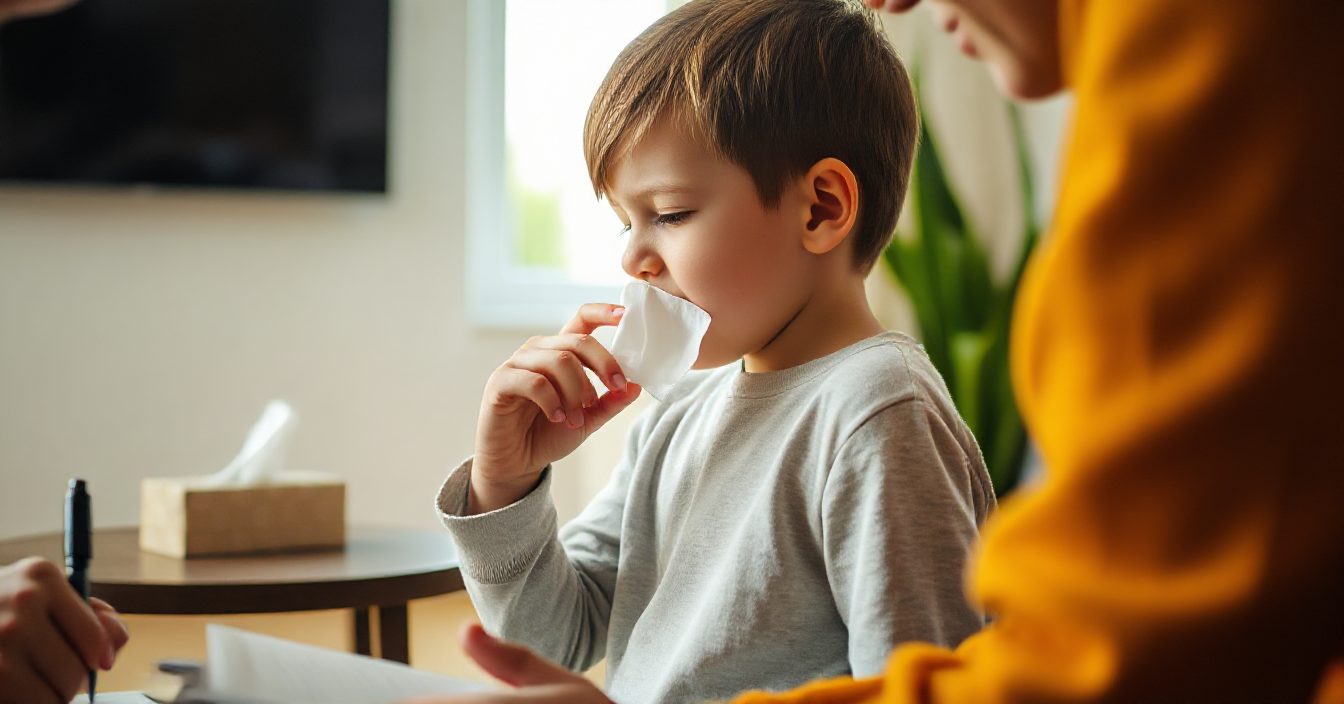
Does your child seem foggier on their worst allergy days? You are probably not imagining it. And you are not the only parent wondering about it.
Allergies are a normal part of many kids' lives. But the sniffles, the broken sleep, and the slow mornings can sit close to another worry: attention. Knowing what to watch for helps you ask better questions, sooner.
I worked in the same district our daughter attended, which made it harder, not easier. There were things I wanted to say for her that I did not say. So now I watch the quiet patterns, and I read the research before I worry about any one of them.
Here is what the research actually says. In a large study of children aged five to sixteen, a 2026 study by Çelik and colleagues found a positive association between allergic disorders and ADHD, with a relative risk of 1.99.
That does not mean one causes the other. It means the two show up together more often than chance would predict. That is worth watching, not panicking over.
What to watch for when allergies flare
You do not need special equipment for any of this. A notebook and your own steady eyes are enough.
- Keep a flare-day log. On days when the sneezing or itchy eyes are worst, jot a line about your child's focus. Were they restless, unable to finish a task, quicker to melt down? Patterns matter more than one bad afternoon.
- Watch the sleep. Congestion steals sleep, and tired kids can look inattentive. Note how your child sleeps during a bad allergy stretch, then how the next day goes. Fatigue often looks a lot like ADHD when it is really just a short night.
- Loop in the teacher. A week into a new allergy season, ask for a short note on focus and participation. A small dip in reading or in finishing work is a clue worth writing beside the symptoms.
- Separate the symptom from the child. When your child feels miserable and foggy, that is the allergy talking. Jot down what lifts when the symptoms lift. It helps you tell a rough week from a lasting pattern.
Look at the whole picture, not one piece
Allergies rarely travel alone. It helps to know which companions carry weight and which may not.
In a 2024 study by So and colleagues, a review of childhood physical health and ADHD, allergies were associated with ADHD on yes-or-no measures.
That same review did not find a significant association between asthma or eczema and ADHD. So one skin rash or one wheeze does not tip the scales on its own.
- Name all the pieces. Write down what your child actually has: hay fever, asthma, eczema, frequent sinus trouble. Seeing it together helps you and your pediatrician talk about the whole child.
- Hold the big claims loosely. A 2026 umbrella review by Dou and colleagues listed an ADHD diagnosis among factors linked to a higher risk of allergic rhinitis in children. But those authors were clear that the overall certainty of the evidence was low. That is your reminder to stay curious, not alarmed.
- Bring questions, not conclusions. If you want to understand your child's immune picture, ask your pediatrician what tests make sense. Ask what the results would, and would not, tell you.
- Note food patterns. Some foods seem to show up alongside nasal symptoms. A simple food-and-symptom diary gives your doctor something real to look at, instead of a hunch.
Simple ways to keep track
The goal here is not a diagnosis. The goal is good notes, so the conversation with your care team is a real one.
- Make a one-page list. Write the things you are watching: allergy severity, when symptoms started, sleep, family history, and any other allergic condition. Add a checkmark when you see one. A growing list is a reason to call, not a verdict.
- Share what you read. Tell your pediatrician you came across research linking allergies and ADHD in children. Ask what it means for your child specifically. Doctors like a parent who brings observations, not internet certainty.
- Ask about an evaluation. If your list keeps filling in, ask for a referral to a child psychologist or developmental pediatrician. A proper evaluation can tell apart ADHD from attention changes that are mostly allergy.
- Set a weekly reminder. Put a recurring note on your phone to update the log. Consistency turns scattered impressions into something your doctor can use.
None of these steps is a diagnosis. And none of them is a reason to start or stop anything on your own. They are ways to gather useful information and walk into the doctor's office with your eyes open.
Mostly, be kind to yourself here. Noticing a pattern is not the same as causing it. Asking a question early is one of the best things a parent can do.
What have you noticed in your child when allergies flare? Share your observations in the comments so we can learn from each other.
Sources
- Çelik, Erkoyun, Haçı, Kaya, Çetinkol, Gül (2026). Association of allergic diseases and attention-deficit/hyperactivity (ADHD) disorder in children: a large-scale cohort study. Allergologia et immunopathologia. PMID 42433047
- So, Dziuban, Pedati, Holbrook, Claussen, O'Masta (2024). Childhood Physical Health and Attention Deficit/Hyperactivity Disorder: A Systematic Review and Meta-Analysis of Modifiable Factors. Prevention Science. PMID 35947281
- Dou, Li, Qiu, Wu, Wang, Chen (2026). Risk factors for allergic rhinitis in children: an umbrella review of systematic review and meta-analysis. Frontiers in Immunology. PMID 42769384