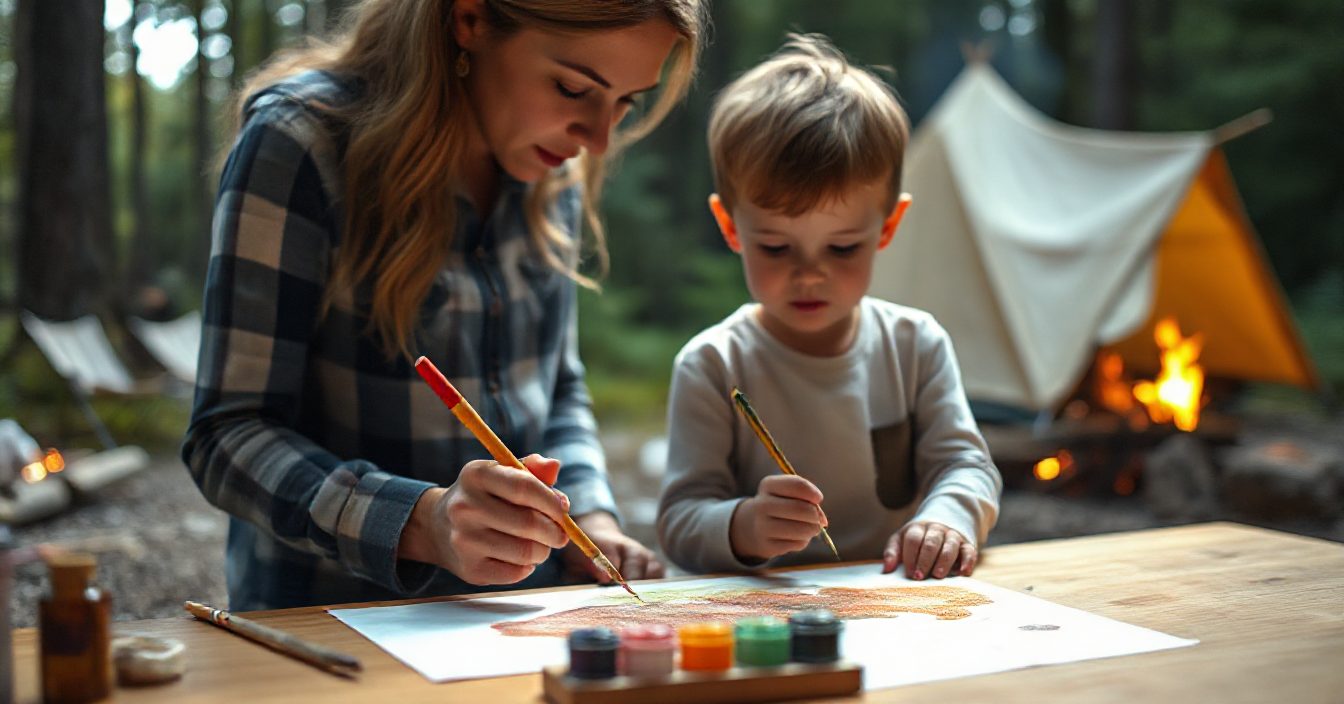
Are you wondering whether a family camp is worth the drive and the packing list? Have you asked yourself if it is just one more thing to manage? The answer may be simpler than you think.
Family camps for autistic kids put parents and children in the same inclusive, activity-filled space for a few days. No waiting rooms. No forms. Just time together with people who get it.
Here is what parents keep learning in these settings, and what the research says about it.
You are not the only one carrying this
The first thing many parents feel at camp is relief. Nobody is staring. Nobody is asking you to explain your child.
A 2026 study by Uysal and colleagues asked parents to write about a 3-day residential sport- and arts-based family camp for autistic children in Türkiye. Parents described it as an inclusive place built on psychological safety, peer support, and shared participation.
That matters more than it sounds. Here are a few ways to lean into it.
- Let your guard down. Parents in that study said the camp eased the stigma and isolation they carry every day. You do not have to perform "fine" for anyone there.
- Talk to the parent beside you. Shared meals give you time with caregivers who understand. One real conversation can undo weeks of feeling alone.
- Join the activity. In the same study, parents felt families rebuilt belonging together, not from the sidelines. Get in the pool. Hold the paintbrush.
Your confidence grows, and so does your voice
Something quiet happens over a few days of camp. You stop feeling like a person waiting for services. You start feeling like a person with ideas.
The same 2026 study by Uysal and colleagues found that participation strengthened parents' confidence, agency, and advocacy. Parents moved from feeling like service recipients toward feeling like codesigners of more inclusive, family-centred support.
You can carry that shift home.
- Watch how staff talk to your child. Camp gives you a live model of calm, patient communication. Borrow the parts that work.
- Speak up about what helps. When you suggest a small change and someone listens, it reminds you that you know your child best.
- Pick one thing to keep. Before you leave, choose a single next step. Maybe a new sensory break. Maybe a local group. One small plan keeps camp alive after you get home.
Connection is doing something, not just being there
One of the best parts of camp is watching your child try something new. There is good reason movement-based activities feel so powerful.
A 2025 review by Xing and Wu looked at motor skills and physical activity for autistic children ages 3 to 17. They found these activities improved motor development. They also noted that children learn well from many kinds of instructors, including camp counselors.
So when the new skill clicks, notice it.
- Let a new coach try. Sometimes a counselor gets a response you have chased for months. That is not a failure on your part. The review found children learn from teachers, coaches, counselors, and peers alike.
- Start with the body. A ball, a paintbrush, a swim lesson. Movement opens doors, and the review tied these kinds of activities to better motor development.
- Count the small firsts. A new skill at camp tells you what your child can do, not just what is hard.
Friendship and behavior can shift together
Camps built around social skills have their own research story. It points to one simple idea. Relationships matter.
In a 2021 study by Kang and colleagues, autistic youth took part in a group-based social skills intervention run in a summer camp format. A stronger bond between the youth and their therapist was linked to fewer problem behaviors reported by parents, and to more reciprocated friendship and social preference reported by peers.
That tracks with what I have seen. My daughter almost always had at least one person at school who truly saw her, usually her counselor or her intervention specialist. That mattered more than any program.
- Look for who your child clicks with. One steady grown-up can do more than a polished schedule.
- Ask about group size and staff. The bond between child and adult is not a nice extra. In the Kang study, it was tied to the outcomes parents care about.
- Give friendships room. Peer connection showed up as a real result, not a side benefit. A camp that makes space for it is doing something that matters.
A few honest thoughts before you go
Family camps are more than a weekend away. For many families they become a moment of belonging, a bit more confidence, and a nudge forward.
If you are curious, look for a program built on inclusive activities, real parent involvement, and genuine peer support. It does not need to be fancy. It needs to feel safe.
Have you been to a family camp, or are you weighing one right now? Tell me what you hope to gain, or what still worries you, in the comments.
This article is for general information only. It is not medical advice and is not a substitute for care from your child's doctor or care team. I'm a parent, not a doctor.
Sources
- Uysal, Okuyucu, Celik (2026). Parents' Experiences of Participation in a Family Camp for Children With ASD: An Inclusive Community in Action. Child: care, health and development. PMID 43045047
- Kang, Gioia, Pugliese, Islam, Martinez-Pedraza, Girard (2021). Alliance-Outcome Associations in a Community-Based Social Skills Intervention for Youth With Autism Spectrum Disorder. Behavior therapy. PMID 33622503
- Xing, Wu (2025). Effects of Motor Skills and Physical Activity Interventions on Motor Development in Children with Autism Spectrum Disorder: A Systematic Review. Healthcare (Basel). PMID 40077051